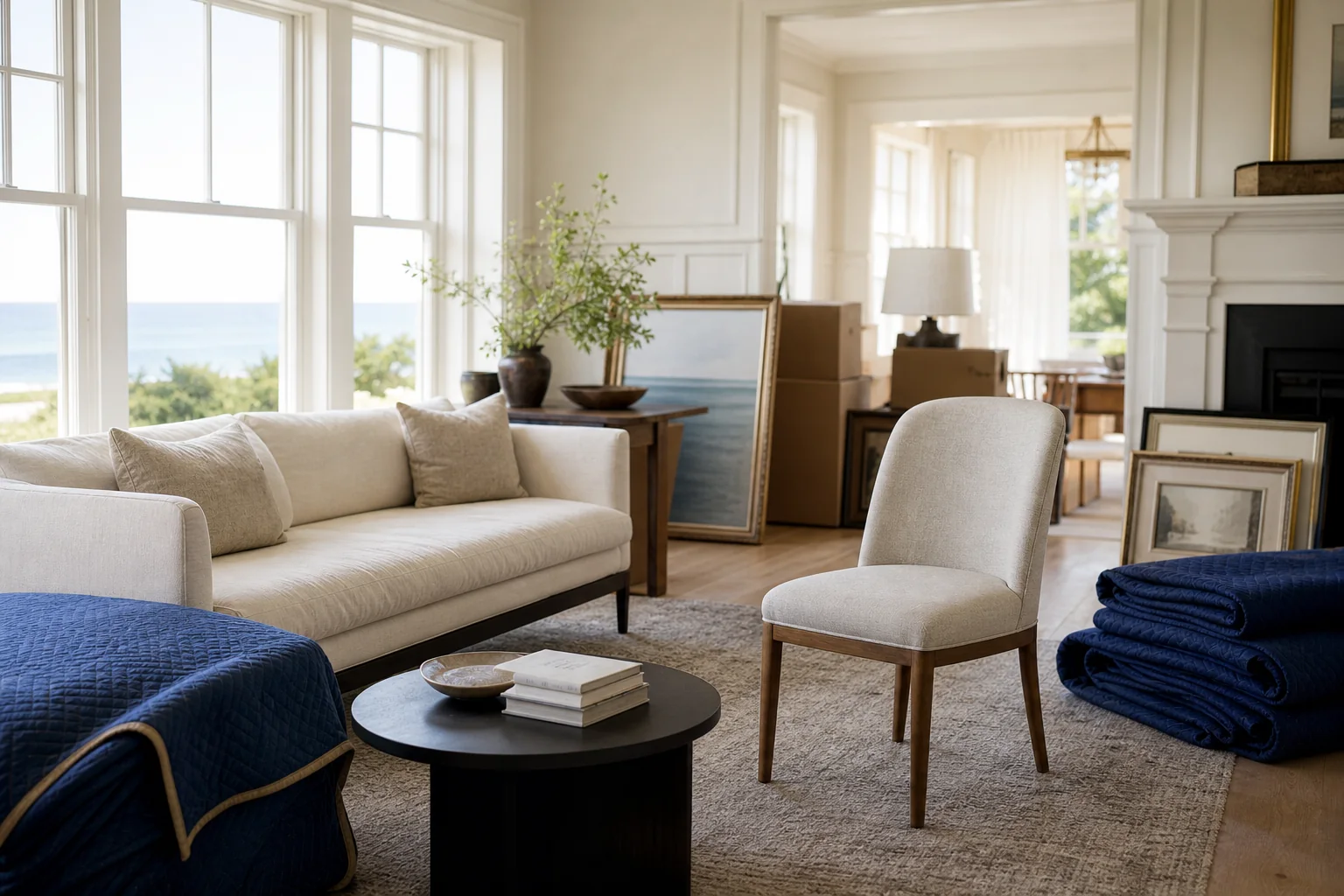
The hardest part of a Hamptons estate sale is not always finding interest. It is deciding what deserves a focused resale effort, what should move quickly, and what should not become a project for the family.
Valuable furniture needs a different workflow from everyday household goods. Sofas, dining tables, outdoor sets, case goods, mirrors, art, and designer pieces need photos, dimensions, maker context, condition notes, pricing context, and a realistic pickup plan.
The first pass should separate value from volume.
A house may have hundreds of objects, but only a smaller group will justify targeted resale work. In the Hamptons, that usually means recognizable designer brands, strong outdoor furniture, dining pieces with scale, clean sectionals, interesting case goods, mirrors, art, and estate decor with character.
That first pass matters because estate timelines create pressure. If every chair, lamp, and side table gets treated the same way, the strong pieces can get buried. The better approach is to identify the pieces most likely to attract real buyers and give them the information they need to move.
Buyers need more than a pretty photo.
The pieces that perform best are usually easy for a buyer to understand. A clear maker, clean condition notes, real scale, and honest access details reduce the back-and-forth that slows estate timelines.
For large furniture, logistics are part of the value story. Stairs, elevators, narrow driveways, gates, guest-house access, and pickup windows can decide whether an interested buyer becomes a real buyer. Those details should be known before negotiations get serious.
Where Heritage Haus fits.
Heritage Haus helps separate the furniture worth listing from the furniture that should be handled another way. For accepted pieces, we prepare listings, distribute them where local buyers already shop, coordinate buyer questions and negotiation, and track sale status.
That structure helps families, executors, property managers, and realtors avoid the common estate-sale trap: too many messages, too many maybes, and not enough confirmed pickups before the house schedule changes.
If you are starting with an estate, send photos of the major furniture first. Wide room shots are useful, but closeups of maker labels, condition, upholstery, tabletop wear, cushions, and access points help the review move faster.